
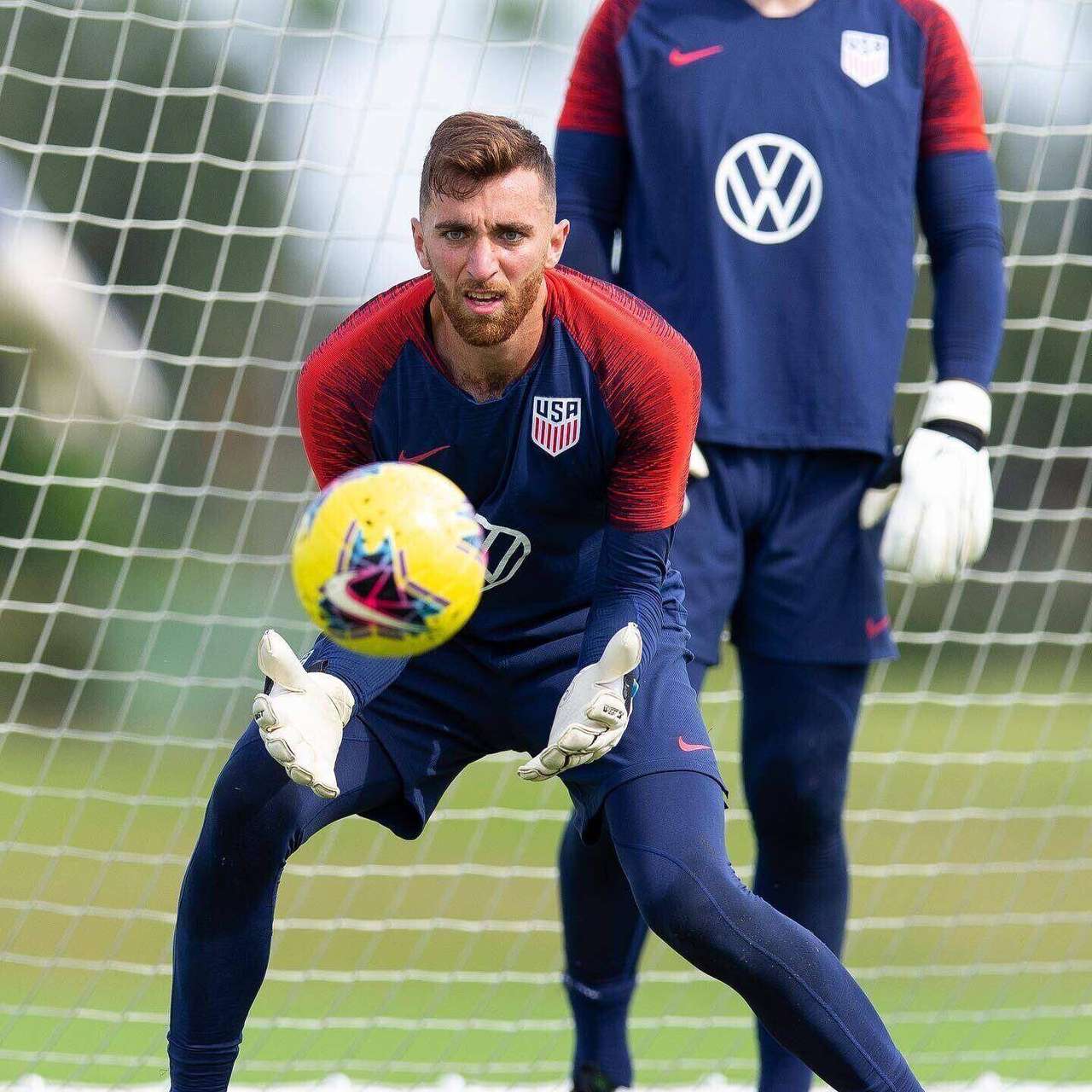
I’ve worked with Matt Turner since his high-school days. Today he’s the #1 goalkeeper for the United States Men’s National Team. He’s played in a World Cup. He’s started for Arsenal and Crystal Palace in the Premier League.
People assume that kind of trajectory looked obvious from the start. It didn’t. What Matt had was the willingness to do the boring work, for years, before anyone outside his immediate circle knew his name. Most kids don’t.
The quality nobody talks about
The single most predictive trait for athletic development isn’t talent. It’s tolerance for low-visibility work.
Most kids will train hard when the game is next weekend. The kids who become Matt Turner train just as hard in February when the next game is six months away. They train the same week the team loses a tournament. They train when their parents stop driving them and they have to figure out their own ride.
Matt had that. He still has that.
What goalkeeping actually demands
For the parents of young goalkeepers (and there are more of you reading this than I would have guessed), the development path is different from outfield play. A few principles that have held up across my decade-plus coaching goalkeepers:
- Reactive speed > linear speed. A keeper rarely sprints 40 yards. They explode 2–6 yards, in any direction, off a single foot. Train accordingly.
- Single-leg power is non-negotiable. Diving saves come off one leg. Most keepers train them off two. That’s a gap.
- The hands are connected to the hips. Bad footwork shows up as bad hands. Always.
- Decision-making is trainable. Most “instinct” is pattern-matching against thousands of reps. The work you do at 14 shapes the keeper you become at 24.
What I’d tell the parent of a 14-year-old keeper
Be patient. Goalkeepers develop slower than outfield players, and the position rewards composure and consistency more than physical gifts. The kid who’s elite at 14 is not always the kid who’s elite at 22. Often it’s the other way.
Train year-round, not just in season. Pick a few people who actually understand the position and let them coach. Limit social media exposure to “highlight” content. Most of it is performative and teaches bad habits.
And most of all: support the boring work. The early mornings, the empty fields, the repetition that no one is watching.
“The Matt Turners of the world aren’t built in stadiums. They’re built in empty gyms on Tuesdays.”
That’s the part of the story that doesn’t make highlight reels. But it’s the part that makes the highlight reels possible.
Ryan